Pool Owner Guide
How to balance your pool
The exact targets, order of operations, and dosing tips our techs use every day across Naples, Marco Island and Bonita Springs.
Ideal water chemistry, at a glance
Test weekly. Adjust in small steps. Re-test before swimming.
Free Chlorine
Sanitizer that kills bacteria, viruses and algae.
- Too low:
- Cloudy water, algae bloom, unsafe to swim.
- Too high:
- Skin/eye irritation, faded liners, bleached swimwear.
- Fix:
- Add liquid chlorine or trichlor tabs to raise; partial drain or sunlight to lower.
pH
Controls how effective chlorine is and how comfortable the water feels.
- Too low:
- Corrodes metal parts, etches plaster, stings eyes.
- Too high:
- Scale on tile, cloudy water, weak chlorine.
- Fix:
- Sodium carbonate (soda ash) raises pH; muriatic acid lowers it.
Total Alkalinity
Buffers pH so it doesn't swing wildly.
- Too low:
- pH bounces, surface etching, corrosion.
- Too high:
- pH locks high, scale, cloudy water.
- Fix:
- Sodium bicarbonate (baking soda) raises; muriatic acid lowers.
Calcium Hardness
Protects plaster, grout and equipment from soft, hungry water.
- Too low:
- Pits plaster, eats grout, foamy water.
- Too high:
- Calcium scale on tile and heater elements.
- Fix:
- Calcium chloride raises; partial drain & refill is the only way to lower.
Cyanuric Acid (CYA)
Stabilizer that protects chlorine from UV burn-off.
- Too low:
- Chlorine evaporates within hours in Florida sun.
- Too high:
- Locks up chlorine — sanitizer becomes ineffective.
- Fix:
- Add stabilizer to raise; partial drain to lower.
Salt (saltwater pools)
Feeds the chlorine generator cell.
- Too low:
- Cell can't produce chlorine, low-salt warning.
- Too high:
- Corrosion of metal fixtures, salty taste.
- Fix:
- Add pool-grade salt to raise; partial drain to lower.
The right order matters
Adjust in this sequence and your chemistry will hold for the entire week — not just the next 24 hours.
- 01
Test first — always
Use a fresh liquid test kit (Taylor K-2006 is our pick) or quality strips. Test pH, chlorine, alkalinity weekly; calcium and CYA monthly.
- 02
Adjust Total Alkalinity
Bring TA into 80–120 ppm before touching pH. A stable buffer keeps pH from drifting after every change.
- 03
Dial in pH to 7.4 – 7.6
Add acid or base in small doses with the pump running. Wait 4–6 hours and re-test before adding more.
- 04
Sanitize — chlorine to 1–3 ppm
Maintain a steady free chlorine residual. Shock weekly (or after heavy use / rain) to 10× the combined chlorine reading.
- 05
Stabilize with CYA
30–50 ppm in Naples sunshine prevents chlorine from burning off in a single afternoon.
- 06
Protect surfaces — calcium
Keep calcium hardness in range to stop pitting on plaster and scaling on heaters and salt cells.
Pro habits
- Test the same time of day, in the same spot — elbow-deep, away from returns.
- Run the pump 8–10 hours daily in summer, 6 in winter.
- Brush walls and steps weekly to prevent algae footholds.
- Backwash or clean cartridges when pressure rises 8–10 psi above clean.
- Keep a small log — chemistry trends tell you about leaks before you see them.
Never do this
- Mix chemicals together — always add separately, into the pool, never the reverse.
- Add chlorine and acid at the same time — wait several hours between.
- Pour shock onto a vinyl liner or fiberglass shell — pre-dissolve in a bucket of pool water.
- Shock during the day — UV destroys it. Always shock at dusk or night.
- Guess dosages — use a calculator (Pool Math app) based on your pool's gallons.
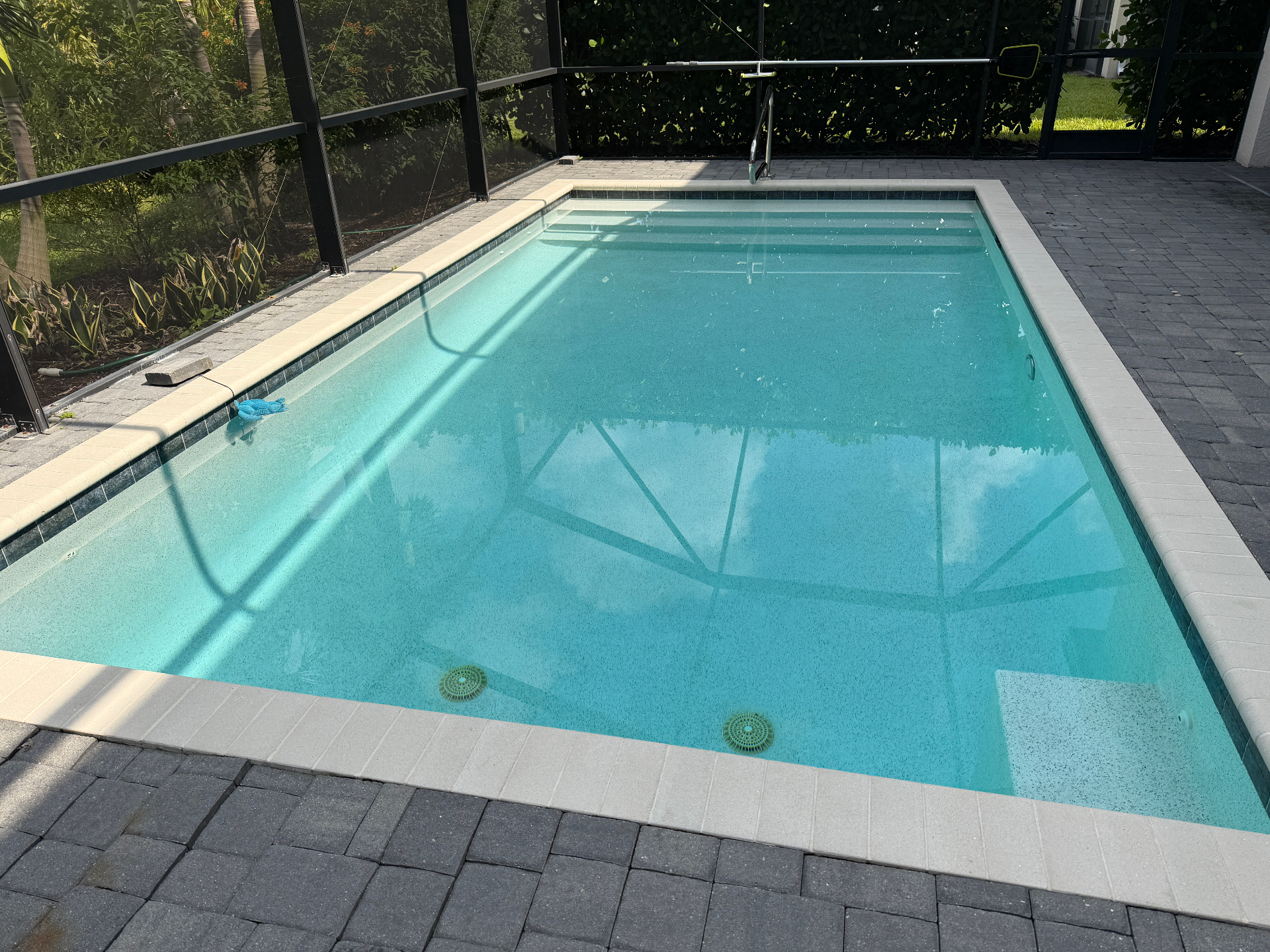
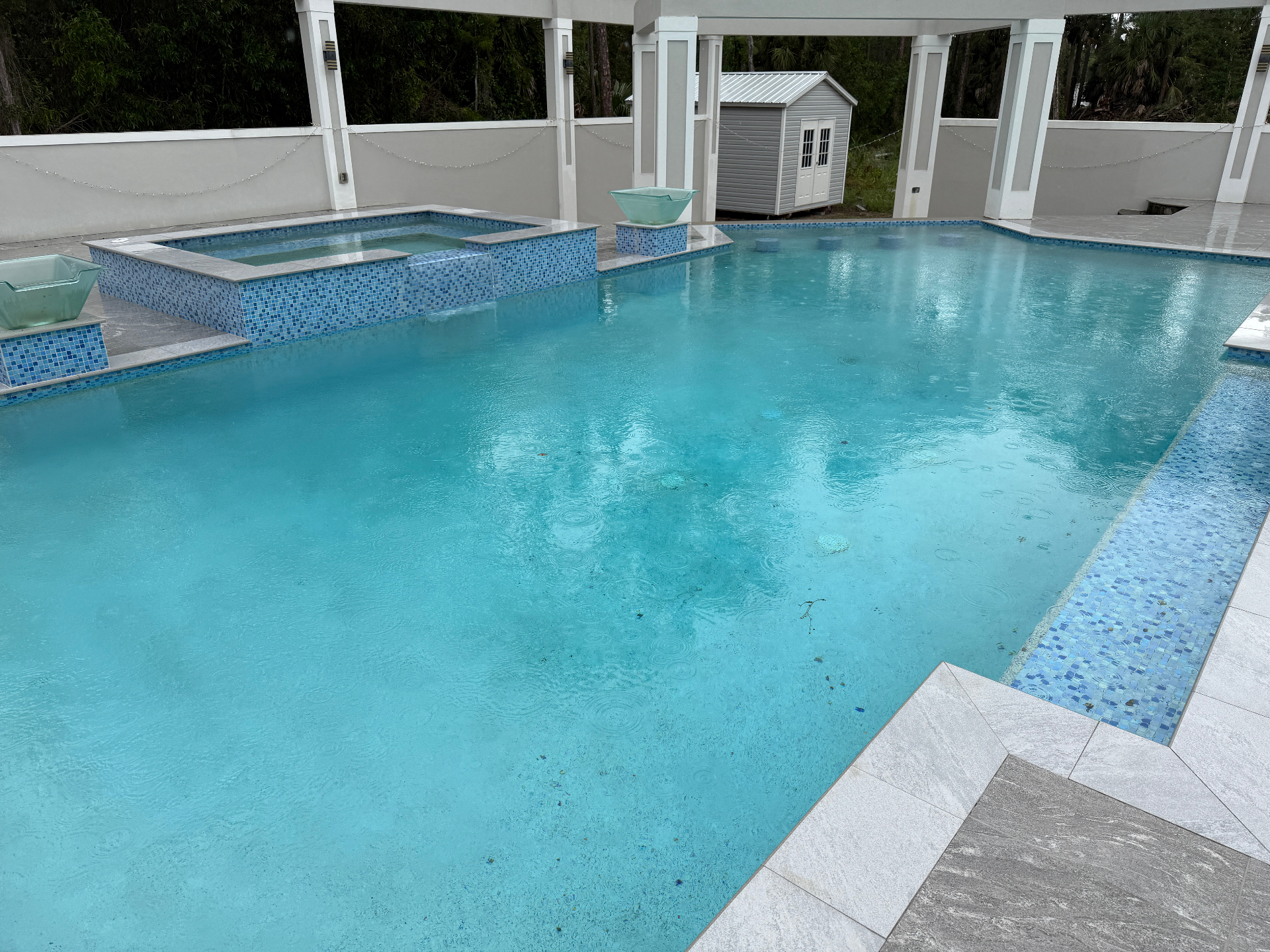
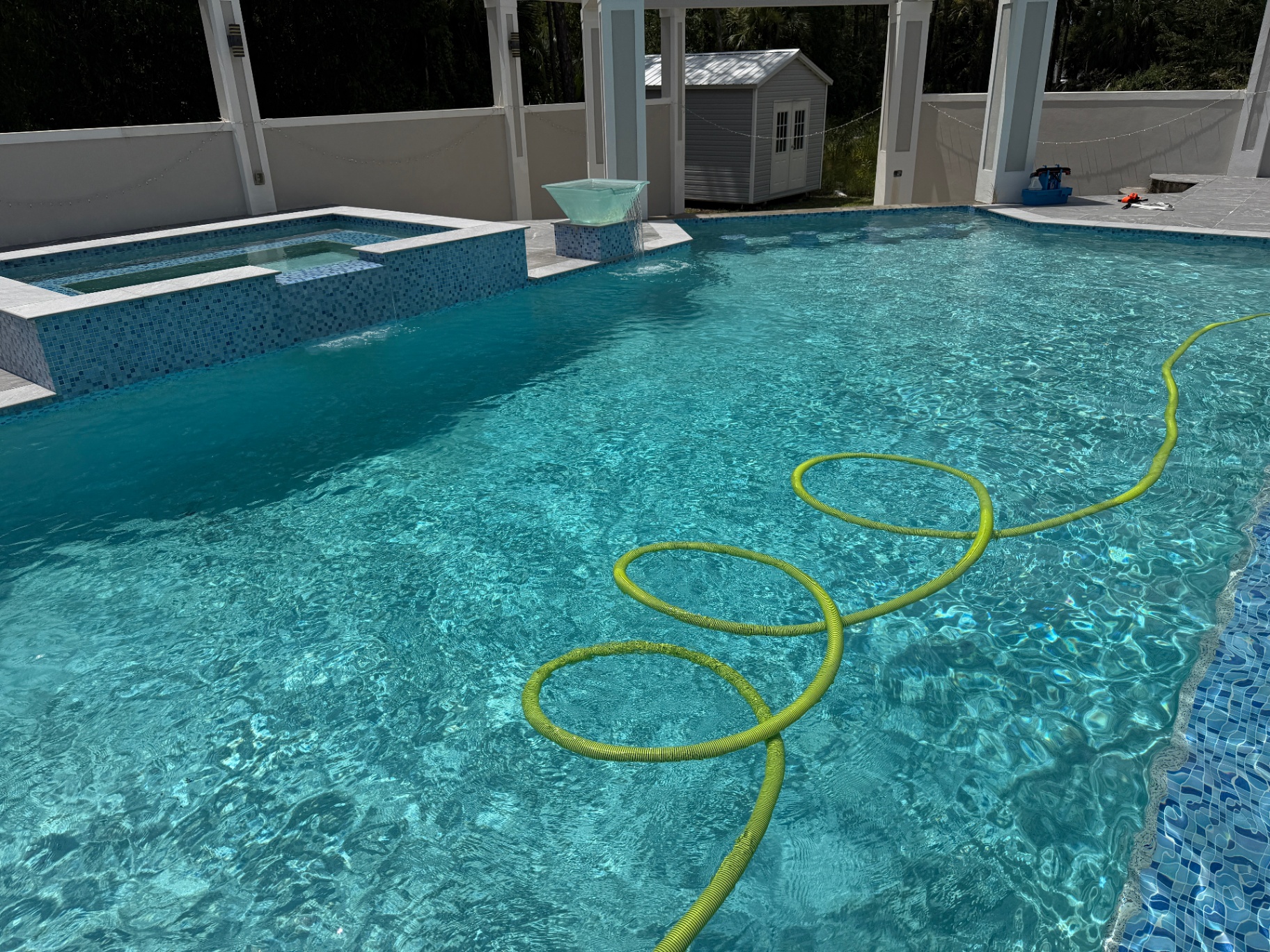
From swamp to sparkling
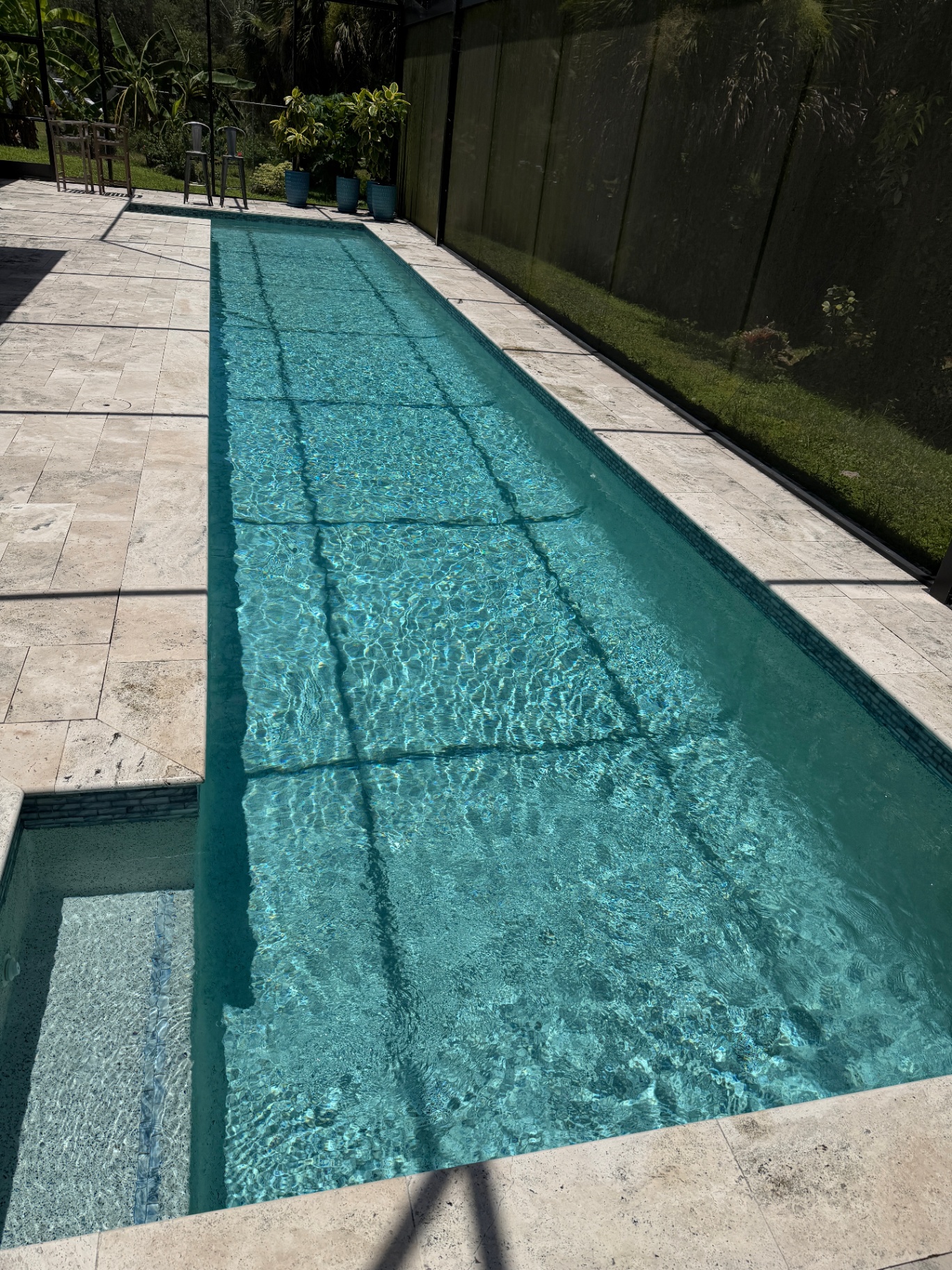
A real Naples pool we brought back with our Green-to-Clean treatment — chemistry rebalanced, filter cleaned, and brushed to bare surface.
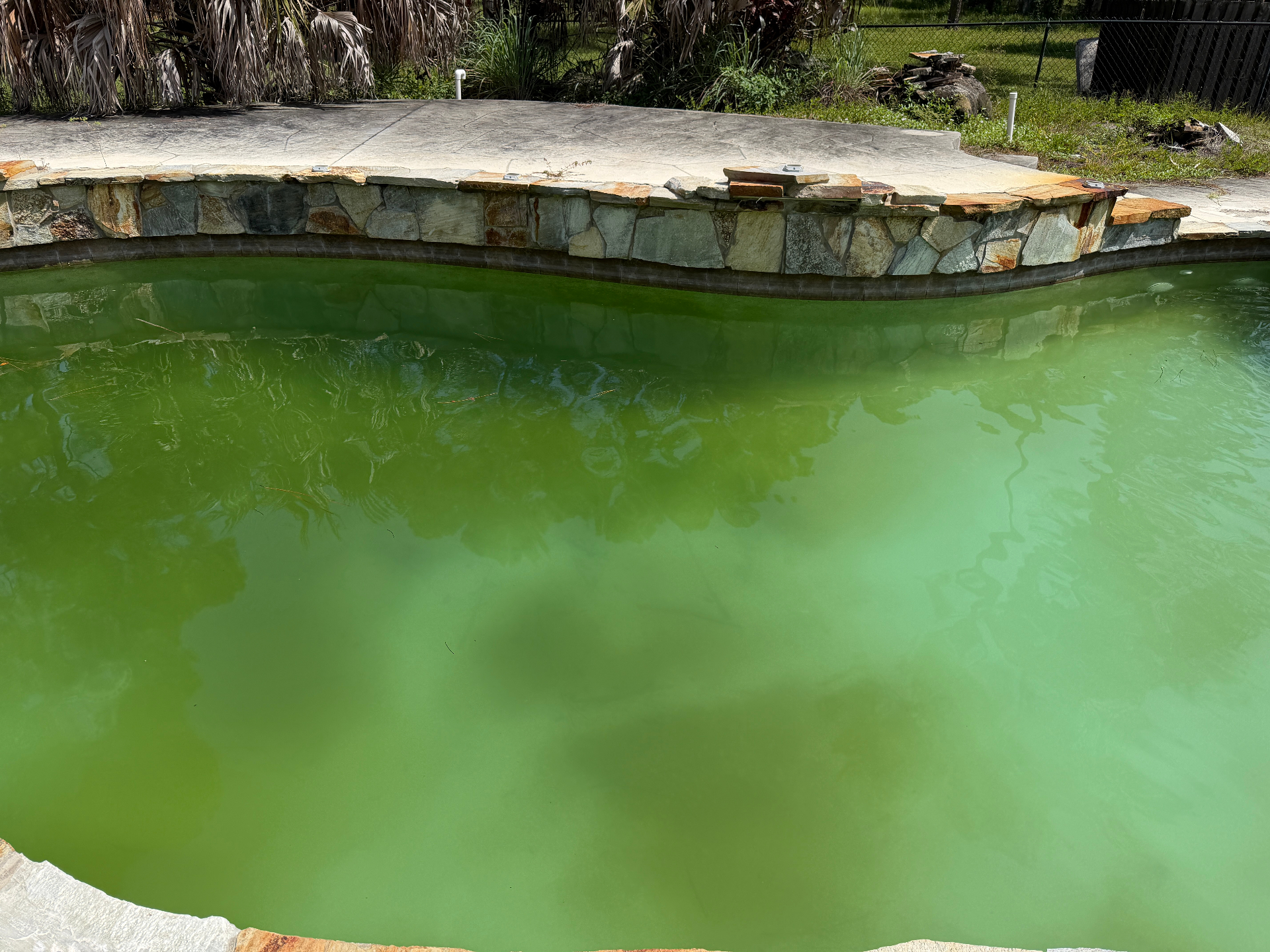 Before
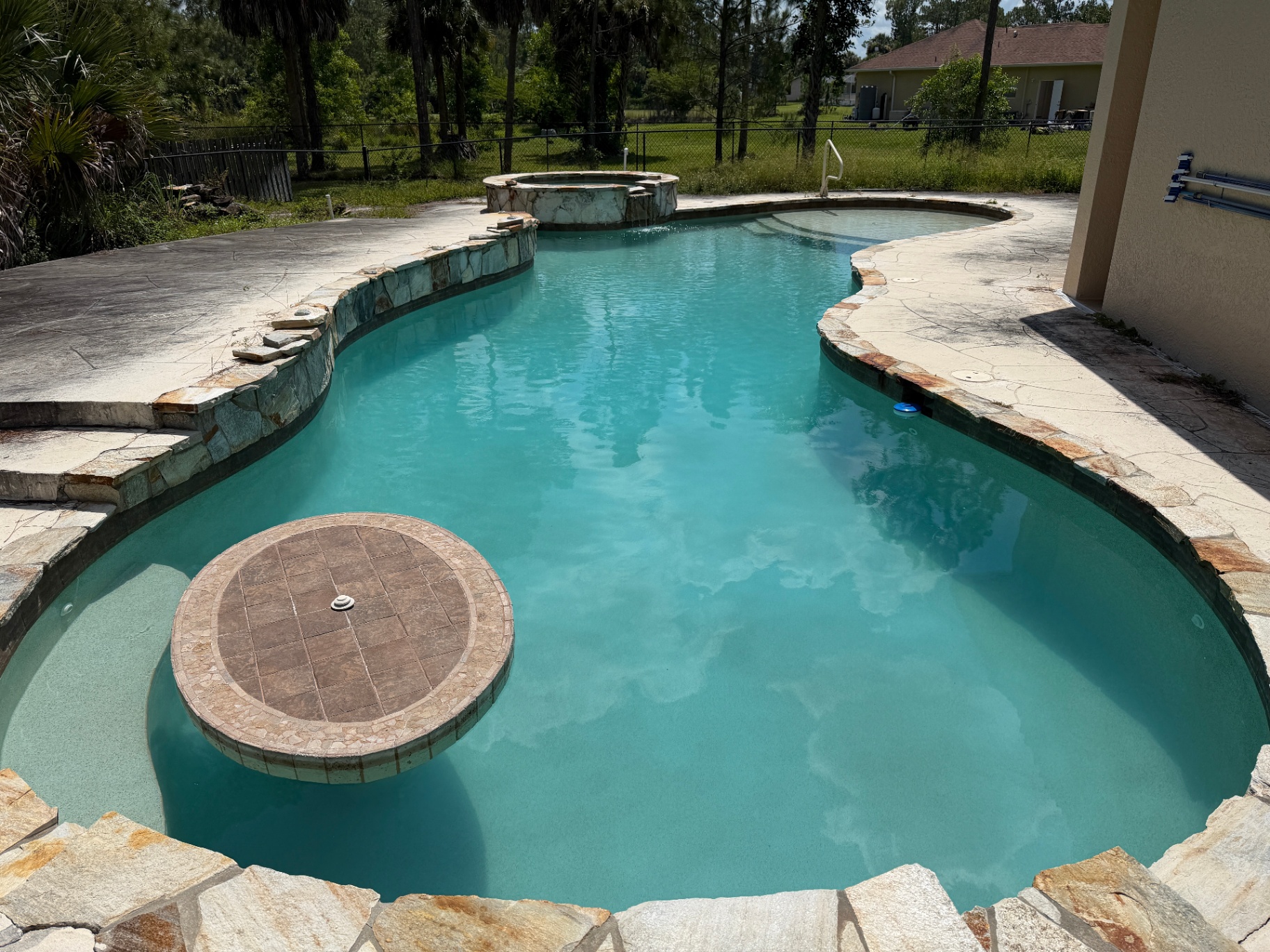 After
After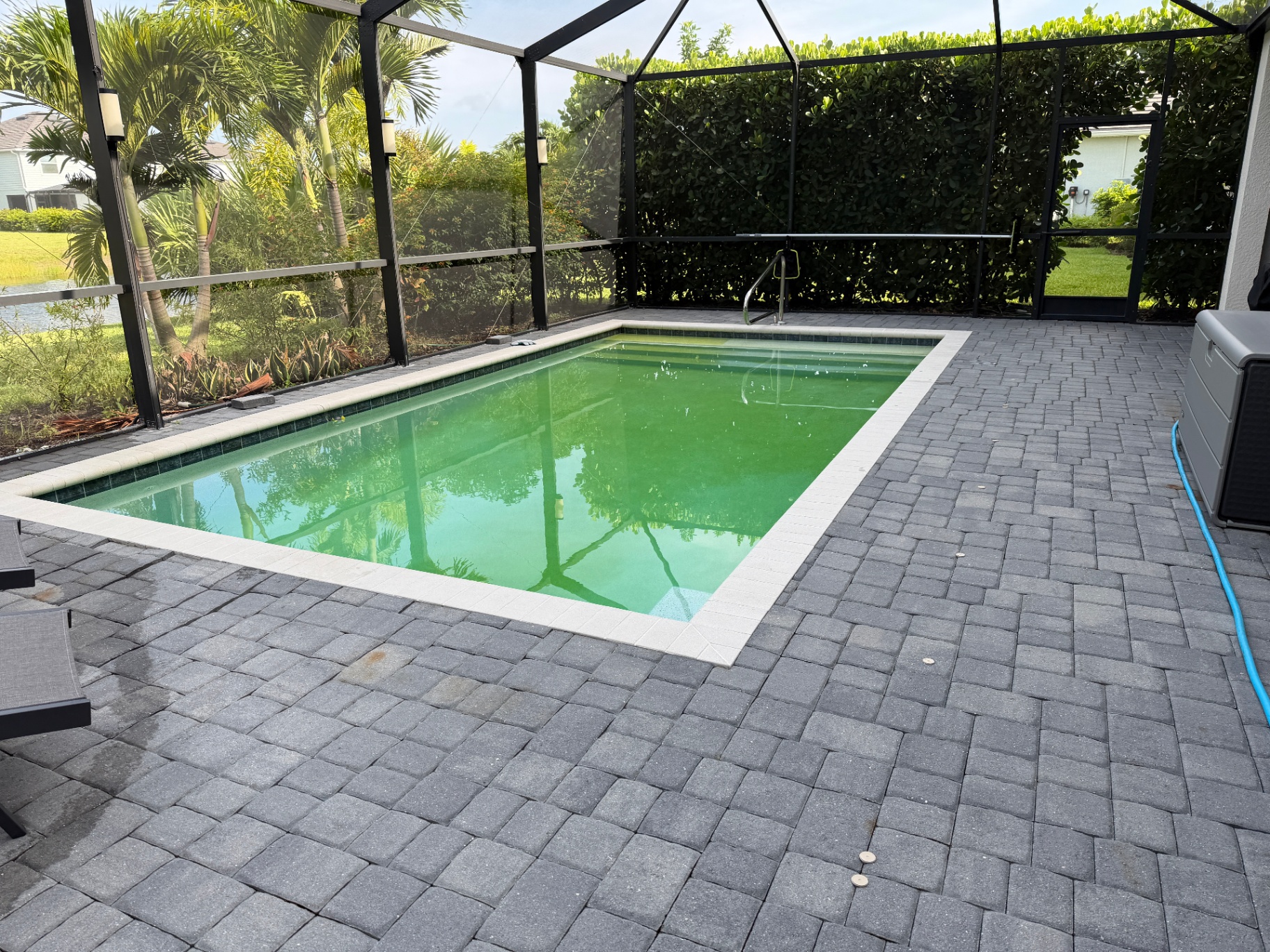 Before
 After
After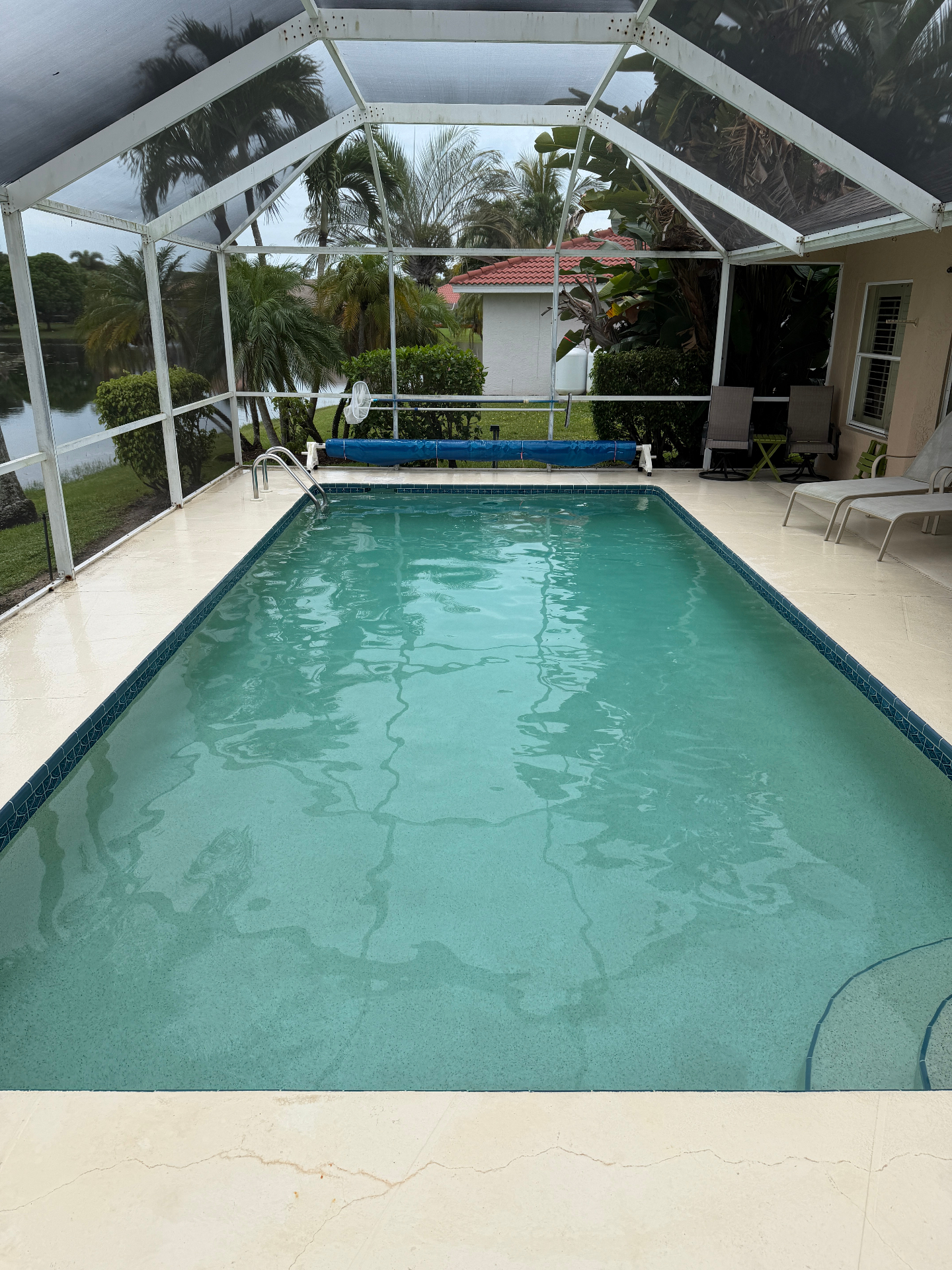
Rather leave it to us?
Our weekly maintenance includes a full chemistry test and balance — with a photo report and chemistry readings after every visit.